 3 分
3 分 シントラのPena宮殿を訪れるベストシーズン
Palácio Nacional da Penaへのご訪問を左右する、混雑状況、天候、光の加減、そしてシントラ特有の微気候について、月別にご案内いたします。
- シントラの微気候がすべての訪問を左右する理由
- 月別ガイド:年間を通じて何が期待できるか
- 30分の時間指定入場ルールとそれが重要な理由
セラ・デ・シントラ · ポルトガル
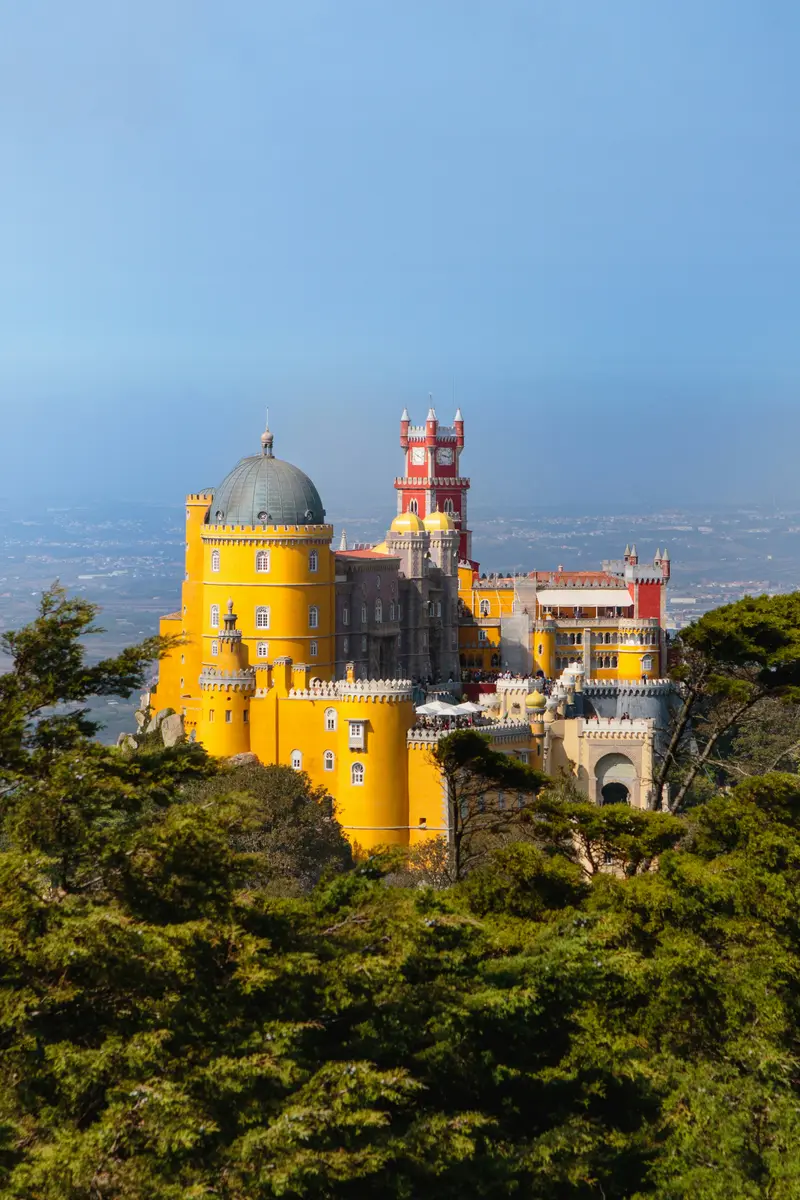
大西洋の海抜530メートルに浮かぶ、カナリアイエローと朱色に染まったドイツ人貴公子の夢想。1910年10月、最後の国王が去ったままの調度が今も残る。
セラ・デ・シントラ · ポルトガル
古い修道院を彩るイエロー、新宮殿の翼を照らすバーミリオン、そしてそのすべてを調和させるマヌエル様式の灰色の石。時を超えて織りなす、この色彩のハーモニーをお楽しみください。


登城路
リスボンの駅から最後の王の寝室へ、そして公園を抜けて戻るまで:実際の見学の流れを、毎日予約を手がける窓口が綴る。
地球上でペーナ宮殿ほど写真映えする建物はそう多くありません。カナリアイエローの時計塔、朱色のマヌエル様式の翼棟、おもちゃのような城塞の胸壁、玉ねぎ型のドーム屋根——それらすべてが、シントラ山脈の最も高い森林尾根に腰掛け、大西洋の霧の海をしばしば突き破って姿を現します。16世紀の修道院の跡地に築かれた19世紀ロマン主義の夢の建築——ポルトガル王妃と結婚した若きドイツ人王子が、山の頂に新しい国家様式を創り出そうと決意した、建築家の白昼夢そのものです。

リスボンからPenaへのアクセス
ペナ宮殿はリスボン中心部から北西に約30kmの場所にあり、ルートは電車、バス、トゥクトゥク、タクシー、そして(週末には一時的に)交通渋滞が入り混じる、有名なややこしさです。主な選択肢は以下の通りです。リスボンのロシオ駅からシントラ行きのCP近郊電車(約40分、頻繁運行、最も信頼できる区間)、その後シントラ駅からスコトゥルブ434番のホップオン循環バスでムーア人の城経由でペナへ。リスボンのホテルからプライベート送迎またはタクシーで直行。またはペナとカボ・ダ・ロカ、カスカイスを組み合わせたガイド付き日帰りツアー。
個人旅行者が引っかかる2つの重要な制約があります。第一に、自家用車は宮殿の門まで乗り入れできません。2022年以降、上部の山道は非居住者の交通が禁止され、駐車場は山の中腹に追いやられ、シャトルバスが運行されています。第二に、434番バスは魅力的ですが、夏の週末には利用者が非常に多く、シントラ駅で45分待ちになることもあります。ほとんどの訪問者には、プライベート送迎または事前予約のトゥクトゥクがより穏やかなルートです。
ルートごとの完全な比較(電車の時刻表、434番対435番のバスループ、タクシー料金、Uberが実際にリスボンから利用する価値がある場合、新しいシャトルバスの仕組みなど)については、/guides/how-to-get-from-lisbon/ ページをご覧ください。

30分の時間指定入場システムの仕組み
2018年以降、Penaの宮殿内部は、Parques de Sintraが運営する厳格な30分単位の予約時間入場制で運用されています。チケットには特定の入場時間帯(例:11:30~12:00)が記載されています。その時間帯に内部へ入場する必要があります。公園自体は公園込みチケットであれば終日開園しており、時間指定があるのは内部のみです。
来訪者がつまずきやすいポイントがいくつかあります。第一に、入場時間帯が定めるのは入場できる時刻であり、滞在時間ではありません。一度中に入れば、部屋を巡る一方通行のルートを歩くのに必要なだけの時間を取ることができ、通常は35~55分です。第二に、時間帯の確認は公園のゲートではなく宮殿の入口で行われるため、内部の時間帯より早く公園に入り、庭園を歩いて登り、時間帯が始まる数分前に宮殿の入口に到着するのはまったく普通のことです(むしろ推奨されます)。第三に、最も写真映えする時間帯——おおむね夏は10:00~12:30、冬は10:30~13:00——の枠は、ピークシーズンには数日前に完売します。第四に、時間帯に遅れても必ずしもチケットが無効になるわけではありません。Parques de Sintraのスタッフは、空きがあれば遅刻者を次の利用可能な時間帯に通常は入場させますが、ハイシーズンには空きがないことがよくあります。
ツアーバスのパターン、写真の光、日々の霧の周期を踏まえてどの時間帯を選ぶべきかの詳細は、/guides/best-time-to-visit/ のページをご覧ください。要点を言えば、09:30~10:30の内部時間帯を、09:00からの公園入場と組み合わせることが、ほとんどの来訪者にとって最良の選択です。

Penaとは何か――なぜポルトガルの他のどの建築とも似ていないのか
Pena(ペナ、古ポルトガル語で「岩」または「崖」を意味し、現代語の「悲しみ」とは異なります)は、イベリア半島で最も完成されたロマン主義様式の宮殿であり、ヨーロッパでも初期のものの一つです — バイエルン王ルートヴィヒ2世のノイシュヴァンシュタイン城より約30年先行しています。この地はもともとNossa Senhora da Penaに捧げられた小さな中世の礼拝堂であり、16世紀初頭からはマヌエル1世王が命じたヒエロニムス修道院が置かれていました。1755年のリスボン大地震で修道院は廃墟と化しましたが、礼拝堂は残りました。その廃墟は約1世紀にわたり放置されました。1838年、王妃マリア2世の夫であり、ヴィクトリア女王とアルバート公の従弟でもあるザクセン=コーブルク=ゴータ家のフェルディナント2世がこの地を私的に購入し、ドイツ人鉱山技師でアマチュア建築家のバロン・ヴィルヘルム・ルートヴィヒ・フォン・エシュヴェーゲを招いて夏の離宮に改築しました。主要な再建工事は1842年から1854年にかけて行われ(周辺の公園と初期の敷地工事は1839年に開始)、フェルディナントが建設したのは意図的な様式のコラージュです:ネオゴシックの城壁、大航海時代を反映したネオマヌエル様式のねじれたロープ装飾、ネオイスラムの馬蹄形アーチとタイル張りのドーム、そしてネオルネサンスの内装。黄色と赤の翼は塗装の偶然ではなく、建物の2つの段階を示しており、赤いマヌエル様式の翼は旧修道院の回廊を包み込み、黄色い翼は新しい王族の居室を収めています。フェルディナントは1885年に死去し、ポルトガル政府は1889年に彼の後妻エリーゼ・ヘンスラー(エドラ伯爵夫人)から宮殿を購入しました。1910年の共和革命でポルトガル王政が終焉した後、Penaは国定記念物に指定され、博物館となりました。1995年、ユネスコはシントラの文化的景観を世界遺産に登録し、Penaはその中心的存在です。

宮殿内部の諸室:1910年10月に時が止まった王室の住居
ペナ宮殿は、ヨーロッパの王宮の中でも異例で、博物館になる直前まで実際の家族の住まいとして機能していました。最後のポルトガル王マヌエル2世は、1910年10月5日の共和革命の際、王室ヨットで亡命しました。彼のペナ宮殿の私室はその後すぐに封印され、オリジナルの家具、書籍、私物、装飾がそのまま保存されました。その結果、今日それらを歩いて見学すると、典型的な博物館の再現というよりは、ベルベットに包まれたポンペイに近い感覚を味わえます。つまり、エドワード朝時代の王室が実際に使用していた姿そのものなのです。
内部ルートは一方通行で、いくつかの異なる雰囲気が展開します。まず、16世紀のヒエロニミト修道院の回廊(アズレージョのタイル装飾あり)から始まり、フェルナンド2世の折衷的な応接室へと進みます。鹿の間(中央にヤシの木を模した漆喰の柱とトロンプ・ルイユの狩猟シーン)、アラブの間(ムーア風の漆喰を模した天井画)、貴賓の間(レセプション用)などがあります。そこからアメリア王妃の部屋(寝室、ティールーム、電話室——ペナ宮殿はポルトガル王室の住居として初めて電話回線が引かれた一つ)を通り、マヌエル2世の居室(1910年夏の最後の滞在時に使用した寝室を含む)で終わります。キッチンには、フェルナンド2世が指定したオリジナルの配置のまま銅製の調理器具が吊るされており、意外な見どころの一つです。
各部屋の写真撮影のコツ(ほとんどの部屋ではフラッシュなしで撮影可能ですが、一部は全面禁止)を含む、部屋ごとの詳細な解説は、/guides/what-to-see-inside/ ページをご覧ください。

公園:200ヘクタールの敷地、湖の谷、シャレー、そして高き十字架
宮殿を取り囲む公園はおよそモナコと同じ広さで、それ自体で半日を過ごす価値が十分にあります。フェルディナンドはここを英国伝統のロマン主義風景庭園として設計し、ポルトガル植民地網の全域とその先から集めた500種以上の植物——オーストラリアの木生シダ、北米のセコイア、日本のスギ、中国のイチョウ——を植えました。一年のどの週にも何かが花を咲かせ、あるいは紅葉しているように選ばれたのです。
わざわざ足を運ぶ価値のある見どころが三つあります。湖の谷は下段の公園にある小さな人工池の連なりで、上段の尾根から流れる小川に養われ、それぞれの湖には城の形をした小さな鴨の家が浮かんでいます。朝霧が公園のどこよりも長く留まる風除けのくぼ地にあり、屋敷全体で最も静かな一角であることが多い場所です。エドラ伯爵夫人のシャレーは西側の公園、宮殿から徒歩約25分のところにあるまったく別棟の建物で、フェルディナンドが1860年代にエリーゼ・ヘンスラーとの私的な隠れ家として建てたスイスシャレー風のコテージです。エリーゼはアメリカ生まれのオペラ歌手で、マリア2世の死後にフェルディナンドが娶り、エドラ伯爵夫人としました。1999年に火災でほぼ焼失しましたが、慎重な修復を経て2011年に再公開されました。ここには専用の予約時間制入場があり、共通券に含まれていて、歩く価値があります。十字架山——クルス・アルタ——は標高528メートルでセラ・デ・シントラ全体の最高地点であり、宮殿から徒歩20分の上り坂です。頂上の花崗岩の露頭からは、フェルディナンドがすべてを配置するときに思い描いた全景が広がります。眼下の宮殿、西の大西洋、南のテージョ川、晴れた日には遠くリスボンの橋々まで。

シントラの微気候:7月でもジャケットが必要な理由
ペーナ宮殿を訪れる際に最も過小評価されている事実は、天候です。宮殿はシントラ山脈の花崗岩の尾根、標高約480メートルに位置し、西へ10キロの大西洋からの湿気を捕らえます。その結果、ミクロ気候が生まれ、リスボン中心部よりも確実に5〜8度涼しく、著しく湿度が高くなります。10月から5月のほとんどの朝と、夏の朝の約3分の1は、朝霧(地元ではネヴォエイロと呼ばれます)が上部公園を包みます。これは単なる注釈ではなく、体験そのものです。
霧の朝のペーナ宮殿は、ヨーロッパ観光における偉大な視覚的贈り物の一つです。黄色い塔が灰色がかった白い雲から現れ、音は消え、観光バスのグループがまだ到着していないため人混みは薄れ、場所はまさにフェルディナンドが依頼したロマン派の絵画のように見えます。晴れた午後のペーナ宮殿も素晴らしいですが、まったく異なる理由からです。公園の頂上にあるハイクロス展望台からは、カボ・ダ・ロカ(ヨーロッパ大陸最西端)、大西洋、テージョ川河口、そして最も晴れた日にはリスボン南部のアラビダ山脈を見渡せます。
実用的な意味として、季節を問わず重ね着を持参すべきです。リスボンのホテルの天気予報が32℃で晴れでも、ペーナでは24℃で突風が吹くことがよくあります。滑り止めのあるつま先の閉じた靴を履いてください。公園の花崗岩の小道は、ほとんどの朝に濡れて滑りやすくなります。最適な時間帯の完全な分析(霧の窓、黄色い塔の影の方向、クルーズ船の観光バスの到着パターン、火曜日と土曜日の違い)については、/guides/best-time-to-visit/ページをご覧ください。

撮影ガイド:光と霧、そして高き十字架の展望台
Penaはポルトガルで最も写真に撮られる建物のひとつであり、象徴的なショットのほとんどは3つのポジションのいずれかから撮られています。宮殿のすぐ南にあるQueen's Terraceでは、黄色い時計塔とその右手に連なる赤いマヌエル様式の翼棟という定番の正面構図が得られます。ここはおよそ09:30から11:30の間、朝の光が撮影者の背後から差し、塔が輝きます。東側の城壁にあるWall Walkからは、キューポラを伴う側面の姿を捉えられ、午後遅くに太陽が背後にあり赤い翼棟が fully に照らされる時間帯が最良です。High Cross展望台——上の公園セクションでご案内した、徒歩20分の上り坂——では、Penaをその景観全体の中に収めた唯一の写真が撮れます。尾根に寄り添う宮殿、その背後の大西洋、そして霧が晴れる前に到着すれば建物の下に広がる雲海もしばしば見られます。
Penaのゴールデンアワーはあまり知られていない秘密です。宮殿の内部は夏は18:30に閉館します(冬はより早く——ライブページでご確認ください)が、公園はより遅くまで開いており、建物の最も美しい景観写真は公園閉園前の30分に撮られます。色が深まり、観光バスはとうに去っている時間です。ドローンはSintra Cultural Landscape全域で禁止されており、これは厳格に取り締まられています。三脚は公園内では許可されていますが、宮殿の室内では認められません。フラッシュはすべての室内で禁止です。日の出のショットに本気で取り組むなら、公園の門は09:00(冬は09:30)より前に開かないことにご注意ください。真の日の出撮影には、公園内ではなくSerra道路沿いの公共展望台のいずれかにいる必要があります。

お子様とご一緒のPena宮殿観光
Penaは、見た目は非常に子ども連れに優しい観光名所です。ディズニーのお城のような外観、鮮やかな色彩、のぞき込める狭間や見つけて楽しめる塔、そしてアヒルが泳ぐ湖やよじ登れる花崗岩の巨石がある公園。ただし実際には、計画しておく価値のあるいくつかの制約があります。宮殿内部は狭い通路の一方通行ルートで、何か所かベビーカーでは通れません。乳児用のソフトキャリアのほうがベビーカーよりはるかに快適です。下の公園ゲートから宮殿までのお散歩は600メートルの急な上り坂で、暑い日には6歳未満の多くが音を上げてしまいます。だからこそ、小さな子ども連れには、ゲートから宮殿前庭までのシャトルバス(Parques de Sintraが少額の追加料金で運行)が正解です。High Crossへはさらに20分、不均一な花崗岩の上を上る必要があり、7歳頃からの歩き慣れた子どもなら可能ですが、それより小さいと疲れ切ってしまいます。宮殿の階にはトイレとカフェがあり、下の公園にもう一つのカフェがあります。
年齢別の子ども向け詳細(ベビーカーの段取り、シャトル、食事場所、10歳未満が確実に楽しめるもの(Stag Roomとキッチンは毎回鉄板)、疲れた小さな子ども連れなら省略すべきもの)については、/guides/with-kids/ のページをご覧ください。
公園
意図的に訪れるべき6つの場所。距離は宮殿の扉からの徒歩時間で表示。


周辺の見どころ
数キロ圏内に4つの記念碑があり、それぞれがまったく異なる魅力を持つ。それぞれを一言で表すとこうだ。
| ペナ宮殿 | キンタ・ダ・レガレイラ | ムーア城 | シントラ国立宮殿 | |
|---|---|---|---|---|
| 時代 | 19世紀ロマン主義様式の宮殿、1838年から1854年 | 20世紀初頭の個人邸宅、1904年から1910年 | 8世紀から9世紀の丘の上の要塞 | 町の中心にある中世の王宮 |
| 特徴 | 色彩、標高、調度の整った王の居室 | 下降と象徴:イニシエーションの井戸、トンネル、洞窟群 | 歩いて巡れる城壁とパノラマ眺望;内部見学なし | 双円錐形の煙突の下に広がるタイル張りのホール |
| 所要時間 | 2時間半~3時間 | 2~3時間 | 1時間~1時間半 | 1時間~1時間半 |
| おすすめの方 | 初めての訪問者、写真愛好家、ご家族連れ | 好奇心旺盛な方、ゆったり過ごしたい方 | ウォーキングと絶景を楽しみたい方 | 雨の午後の街歩き |
ペナ宮殿と組み合わせて訪れる最も一般的な第二のアトラクションは、クインタ・ダ・レガレイラです。20世紀初頭にブラジル系ポルトガル人の実業家アントニオ・アウグスト・カルヴァーリョ・モンテイロが建設した邸宅で、難解な象徴主義、イニシエーション・ウェル、洞窟、庭園が特徴です。両施設はシントラの旧市街で徒歩約25分の距離にあり、互いに補完し合う関係であり、代替ではありません。
ペナは高く、劇的で、パノラマ的で、王室的です。その支配的な印象は色彩と高度——青空や灰色の霧に映える黄色い塔、遠くから見るために作られた建物です。レガレイラは低く、秘密めいて、垂直で、難解です。その支配的な印象は下降と象徴——イニシエーション・ウェルは9層の螺旋を描いて地下へと続き、庭園は隠れたトンネルで結ばれ、図像はテンプル騎士団、フリーメイソン、錬金術の伝統から引用されています。両方を一日で訪れようとするほとんどの訪問者は、どちらかに疲れて急いで到着します。一日の訪問者にとっての正解は、自分の気質に合った方を選ぶことです。二日間の訪問者にとっての正解は、霧の多い朝にペナ、晴れた午後にレガレイラを訪れることです。
よくある質問
ペナ宮殿について寄せられるすべての質問を、アルファベット順にまとめました。気になる項目を開くと、その場で答えが読めます。
Elise Henslerはアメリカ生まれでスイスで育ったオペラ歌手で、Ferdinand IIがQueen Maria IIの死後に出会いました。二人は1869年に結婚し、彼女はCountess of Edlaに叙されました。Ferdinandは彼女のために、Pena公園の西側にスイスシャレー風の小さな館を私的な隠れ家として建て、本宮殿とは意図的に異なるものにしました。1999年の火災で大きく損傷し、修復を経て2011年に再開しました。独自の予約時間入場があり、Penaの組み合わせチケットに含まれています。
High Crossは、シントラ山脈の最高地点である海抜528メートルの花崗岩の岩山で、宮殿から上部庭園を通って南東へ徒歩約20分の上り坂です。小道は凹凸のある花崗岩で、ベビーカーや車椅子ではご利用いただけません。大西洋、Cabo da Roca、テージョ川、そして宮殿そのものを広大な景観の中でご覧いただける絶景がお楽しみいただけますので、歩く価値は十分にございます。敷地内で最も優れた撮影スポットとして知られております。
Parques de Sintraのスタッフは通常、空きがあれば遅れて到着した訪問者を次の利用可能な枠に案内しようとしますが、ハイシーズン(概ね4月から10月、およびリスボンにクルーズ船が寄港する日)には空きがないことがほとんどです。安全のため、時間枠の5〜10分前には宮殿の扉に到着してください。コンシェルジュを通じて予約された場合は、遅れると分かり次第すぐに連絡して調整してもらいましょう。
ペナ宮殿は、1842年から1854年にかけて、ポルトガル女王マリア2世のドイツ生まれの夫であり、英国のヴィクトリア女王とアルバート公の従弟でもある、ザクセン=コーブルク=ゴータ家のフェルナンド2世のために建設されました。フェルナンドは1838年にこの丘の上の土地を購入し、ドイツ人鉱山技師でアマチュア建築家のバロン・ヴィルヘルム・ルートヴィヒ・フォン・エシュヴェーゲに依頼して、王室のためのロマン主義的な夏の離宮に変貌させました。宮殿は、マヌエル1世が創建し、1755年のリスボン大震災で廃墟となった16世紀のヒエロニミテ修道院の跡地に建てられました。修道院の礼拝堂とマヌエル様式の回廊は生き残り、新しい建物の中に意図的に保存されました。フェルナンド自身が鮮やかな配色、折衷的な復興様式の融合、そして周囲の公園を監督しました。1885年に彼が亡くなった後、ポルトガル政府は1889年にペナ宮殿を買収し、1910年の共和革命を経て国宝に指定されました。
はい。ペナ宮殿は、シントラの文化的景観の中で最も際立ったアトラクションであり、日帰り旅行者の多くが「見逃した」と後悔する場所です。セラ・デ・シントラの最も高い森林に覆われた尾根に位置し、カナリアイエローの時計塔、朱色のマヌエル様式の翼棟、ムーア風の城壁は、ヨーロッパで最も写真に撮られる建物の一つです。内部には、1910年10月に王政が崩壊した際にポルトガル王室が残したままの王族の居室がほぼ完璧に保存されています。もし一日で一箇所しか訪れられないなら、ペナ宮殿を選び、シントラの町からの電車とバスを含めて最低4時間は確保してください。時間に余裕があれば二箇所目として、秘教的庭園とイニシエーションの井戸で知られるキンタ・ダ・レガレイラ、または隣接する8世紀のムーア城(城壁と大西洋の眺望が魅力)を組み合わせるのがおすすめですが、三箇所すべてを一日で回ろうとすると、ほとんどの訪問者が慌ただしいと感じます。
ほぼすべての初回訪問者にとって、パレス+パークチケットが正しい選択です。パーク限定チケット(Parques de Sintraが直接低価格で販売)は、200ヘクタールの敷地、外側のテラス、谷間の湖、そしてペーナの外観写真で見たことのあるほぼすべての景色をカバーします。繰り返し訪問する方で、部屋よりも景観に焦点を当てているなら検討に値します。それ以外のすべての方にとって、内部こそがペーナを単なる写真映えするポルトガルの城に留めていない理由です。王族の部屋は1910年10月に王政が崩壊した日に封鎖され、王族が去ったそのままの状態で残っています——革命の真っ最中に午後の時点で凍結された、使用中の邸宅です。Pena Palace Ticketsでは、パレス+パークをスキップ・ザ・ライン優先入場付きで予約でき、母国語でのサポートも料金に含まれています。当社ではパーク限定オプションは販売していません。必要な場合は、Parques de Sintraの公式ウェブサイトまたはチケット窓口で直接ご予約ください。
Pena Palaceの内部と周囲200ヘクタールの公園への入場、宮殿入口での優先入場付き。30分の時間枠はご到着前に確保されます。
ガイド
訪問時間、交通手段、館内の見どころ、家族での訪問、そしてペナとレガレイラの選び方——じっくり読みたいテーマを網羅。
3 分 Palácio Nacional da Penaへのご訪問を左右する、混雑状況、天候、光の加減、そしてシントラ特有の微気候について、月別にご案内いたします。
 3 分
3 分 リスボン中心部からPalácio Nacional da Penaの入口まで、実用的なすべての交通手段を所要時間、乗り換え地点、434番バスの循環ルートの詳細とともにご案内いたします。
3 分 シントラで最も多くの方が訪れる二大名所を、コンシェルジュ視点で徹底比較。異なる時代、異なる建築主、異なる雰囲気を持つこの2つの名所――1日しか滞在できない方のための選び方をご案内いたします。
 3 分
3 分 銀箔で装飾された鹿が印象的なStag Roomから、トロンプ・ルイユ(だまし絵)の天井が見事なArab Room、保存状態の良い王室の居室、そして広大な庭園まで――宮殿のすべてのエリアで注目すべきポイントをご紹介いたします。
 3 分
3 分 ベビーカーの現実、年齢別の見どころ、お子様が本当に楽しめるポイント、そしてPena宮殿とムーア城を組み合わせた、家族で楽しめるシントラ一日プランをご紹介します。
登城路
開館時間、住所、アクセス、手荷物、写真撮影——運営元に確認済みの情報です。
| 開館時間 | 毎日 09:30~18:30(最終入場 17:30)。12月25日および1月1日は休館。 |
|---|---|
| 住所 | Estrada da Pena, 2710-609 Sintra, Portugal |
| アクセス | リスボンのRossio駅からSintraまでの列車(40分)。Sintra駅からは、434番バスが15分ごとに宮殿へ運行しています。 |
| バリアフリー情報 | 庭園内の小道は石畳で起伏があります。入口ゲートから宮殿エントランスまではシャトル(€3)が運行しています。宮殿内では1階のお部屋はアクセス可能ですが、上階の居室へは階段が必要です。 |
| 手荷物について | 小型のバッグは持ち込み可能です。大型のバックパックは入口でお預けいただきます(無料)。 |
| 撮影について | 王室の居室内部を除き、どこでも写真撮影が可能です。 |
| 休館 | 2026年7月3日 · 2026年7月4日 · 2026年7月5日 · 2026年7月6日 |
Pena宮殿は、大西洋から標高530メートル、シントラの緑深い丘の上に佇む19世紀の王室夏の離宮です。鮮やかな黄色と赤の塔、マヌエル様式の回廊、ムーア風の城壁が調和したその姿は、ヨーロッパで最も写真に収められる建築物のひとつであり、ロマン主義時代を代表する宮殿建築の先駆けとして知られています。
宮殿内部は、1910年にポルトガル王室が最後に去った当時のまま、ほぼ完璧に保存されています。厨房には銅製の調理器具が並び、ベッドサイドテーブルには家族写真が飾られ、ワードローブにはモノグラム入りのリネンが収められています。
宮殿を囲む200ヘクタールの広大な庭園は、椿や巨大なシダ、隠れた装飾建築が点在する森となっています。多くのお客様は、全体で3~4時間ほどご滞在されます。
Pena Palace Ticketsは、海外からの訪問者向けの独立系予約デスクです。パルケス・デ・シントラ公式の「宮殿+公園」チケットを、お客様の言語と通貨で代理購入し、海外からでは対応が難しいトラブル——夏の売り切れ時間帯、434番バスの行列、霧、そして待ってくれない入場枠——まで、すべてお引き受けします。
このページの各記述は宮殿自身のページおよびここに記載された情報源と照合して確認され、レビュー日は推測ではなく明記されています。
Pena Palace Ticketsは、国際的な訪問者が公式運営者であるParques de Sintra – Monte da Luaから直接スキップ・ザ・ライン・チケットを購入できるよう支援するファシリテーターです。当社はチケットの転売は行いません — お客様の言語でパーソナライズされた予約およびサポートサービスを提供します。