 Coupe-file disponible
 Palácio Nacional da Pena ou Quinta da Regaleira : lequel choisir ?
Une analyse comparative détaillée des deux monuments les plus visités de Sintra — époques différentes, commanditaires différents, atmosphères différentes — et nos conseils pour choisir si vous ne disposez que d'une journée.
Le paysage culturel de Sintra, classé au patrimoine mondial de l'UNESCO, compte plus d'une douzaine de palais, quintas, couvents et jardins, mais deux sites dominent l'itinéraire moderne : le Palácio Nacional da Pena et la Quinta da Regaleira. Distants d'à peine deux kilomètres sur la même crête boisée, ils appartiennent pourtant à des siècles différents, à des tempéraments différents et presque à des philosophies différentes de ce que doit être un domaine de Sintra. Pena est un palais royal édifié entre 1836 et 1854 pour Ferdinand II de Saxe-Cobourg-Gotha, prince consort de la reine Marie II, et incarne la passion romantique européenne pour l'architecture néo-historique. La Quinta da Regaleira est un domaine privé du début du XXe siècle, achevé en 1910 pour l'homme d'affaires luso-brésilien António Augusto Carvalho Monteiro, dont l'architecture paysagère fut confiée à l'Italien Luigi Manini et qui porte une forte empreinte de symbolisme maçonnique, templier et alchimique. Ce guide les compare en toute objectivité afin que les visiteurs ne disposant que d'une journée sachent lequel privilégier.
Deux siècles différents, deux commanditaires différents
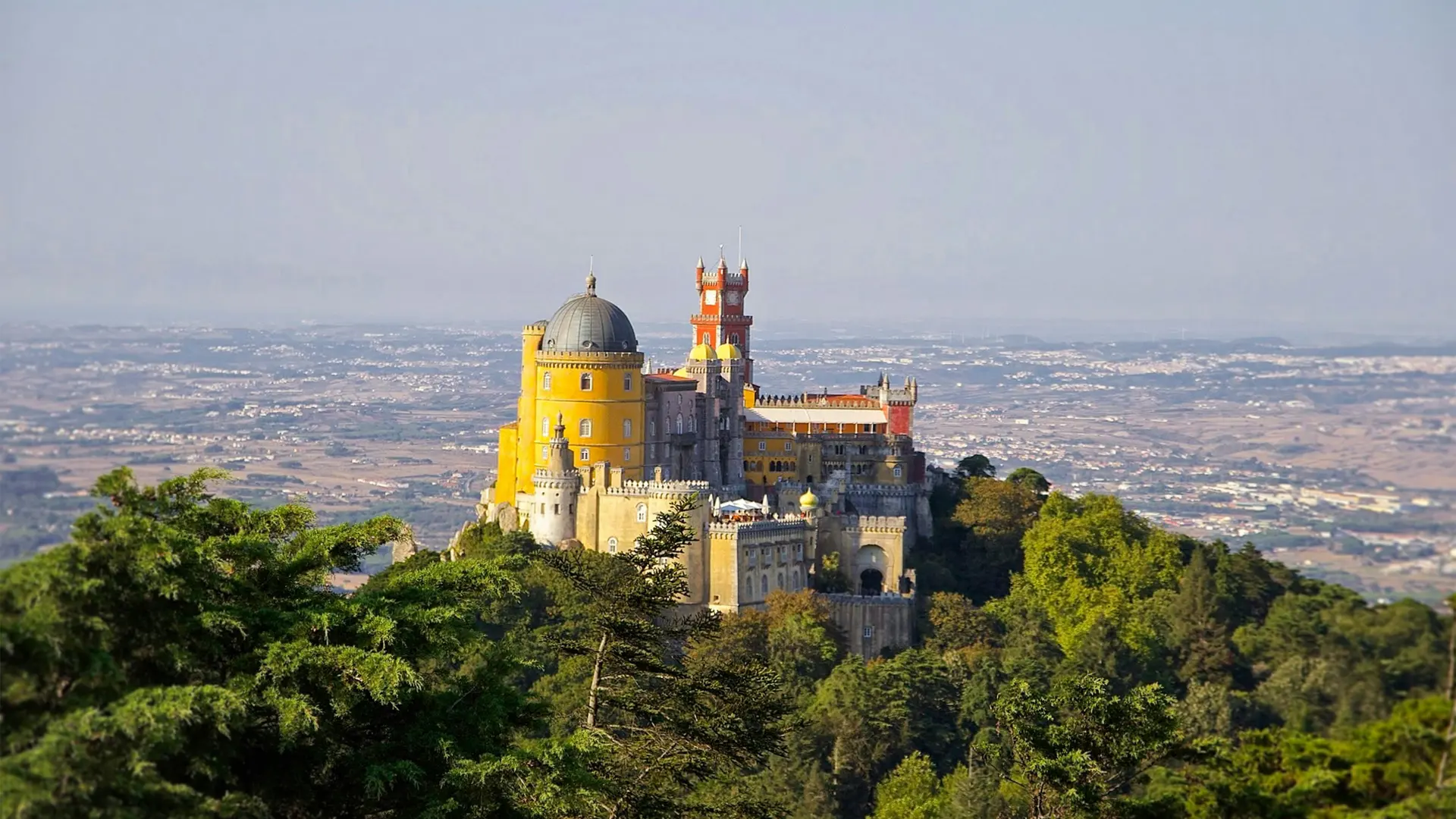
La différence fondamentale entre Pena et Regaleira réside dans l'identité de leurs bâtisseurs et leurs motivations. Pena est un monument royal : Ferdinand II, prince allemand devenu prince consort par son mariage avec la couronne portugaise, acquit en 1838 les ruines du monastère hiéronymite sur la crête de Pena et les transforma en seize ans en ce palais que nous admirons aujourd'hui. Son architecte, le baron bavarois Wilhelm Ludwig von Eschwege, conçut un édifice délibérément éclectique fusionnant éléments manuélins, néo-mauresques, néo-gothiques et Renaissance, dans les teintes iconiques jaune et rouge. L'intention était de créer un monument romantique national exprimant l'identité portugaise à travers ses vocabulaires architecturaux historiques. Pena est, en ce sens, une expression de l'imaginaire d'État du XIXe siècle.
La Quinta da Regaleira relève d'un projet fondamentalement privé. Carvalho Monteiro fit fortune dans le café et les pierres précieuses au Brésil, revint au Portugal et commanda un domaine qui exprimerait ses intérêts personnels : alchimie, franc-maçonnerie, mythologie des Templiers, littérature classique et mysticisme catholique. Manini, son architecte, s'inspira de formes néo-manuélines similaires à celles de Pena, mais les orienta dans une direction plus ésotérique, créant le Puits initiatique, un réseau de grottes et tunnels, la Chapelle de la Sainte-Trinité, et un jardin organisé autour d'itinéraires symboliques. Là où Pena projette puissance royale et récit national, Regaleira projette obsession individuelle et symbolisme privé. Les deux visites offrent des expériences distinctes précisément parce que leurs commanditaires avaient des intentions différentes.
Architecture et atmosphère comparées
Pena est éclatant. L'extérieur est peint dans un jaune saturé sur le noyau monastique ancien et un rouge profond sur l'aile palatiale plus récente, agrémenté de panneaux d'azulejos bleus, de colonnes torsadées manuélines, de gargouilles et d'une allégorie de Triton au-dessus de l'arc principal. Depuis le point de vue de la Croix Haute dominant le palais, par temps clair, cette palette chromatique se détache sur l'horizon atlantique à plusieurs kilomètres de distance. Les intérieurs sont tout aussi théâtraux : la Salle du Cerf avec son plafond sculpté de cerfs à la feuille d'argent, la Salle arabe avec ses voûtes peintes en trompe-l'œil, la Salle indienne, le Salon noble, et les salles à manger préservées telles qu'elles étaient lorsque la famille royale les quitta en 1910. L'effet d'ensemble est exubérant, spectaculaire et conçu pour l'impact.
Regaleira offre une atmosphère plus intimiste. Le Palais Regaleira lui-même se révèle plus compact et moins richement meublé que Pena, l'expérience principale se déroulant dans les jardins. Le Puits Initiatique constitue l'attraction phare : une tour inversée de vingt-sept mètres s'enfonçant dans la terre par un escalier en colimaçon de neuf paliers, censé symboliser les neuf cercles de l'Enfer de Dante ou les neuf niveaux d'initiation templière, selon l'interprétation retenue. Des tunnels relient le puits à des grottes et des lacs de cascade disséminés sur le domaine. L'ambiance y est contemplative, mystérieuse, et se savoure idéalement sans précipitation. Là où Pena récompense la photographie et l'émerveillement panoramique, Regaleira gratifie l'exploration patiente et la volonté de découvrir le symbolisme étape par étape.
Temps, effort et organisation
Une visite ciblée de Pena demande environ deux heures et demie à trois heures : quarante minutes à l'intérieur des salles du palais selon la règle de l'entrée à horaire réservé, une heure à explorer les terrasses et points de vue immédiats autour du bâtiment, et une heure supplémentaire si vous descendez à travers le parc jusqu'à la Vallée des Lacs ou montez jusqu'à la Haute Croix. La montée depuis la porte inférieure du parc jusqu'au palais est raide — vingt à vingt-cinq minutes de marche en côte sur les pavés —, mais une navette circule à l'intérieur du parc pour les visiteurs qui préfèrent l'éviter. Pena se situe sur une crête de montagne à environ quatre cent quatre-vingts mètres d'altitude, de sorte que la météo et la visibilité sont des facteurs bien réels.
Regaleira se situe bien plus près du centre historique de Sintra, à quelques minutes à pied en montée du Palácio Nacional de Sintra dans la ville. La plupart des visiteurs consacrent entre deux et trois heures au domaine : l'intérieur du palais occupe environ trente à quarante minutes, tandis que le jardin, incluant la descente dans le Puits Initiatique et le parcours du réseau de tunnels jusqu'au Lac de la Cascade, absorbe aisément le temps restant. Le terrain s'avère irrégulier, avec des marches, des tunnels étroits et de la pierre couverte de mousse glissante dans les grottes, mais il n'y a aucun équivalent du microclimat lié à l'altitude de Pena — Regaleira se comporte comme la ville en contrebas, non comme la crête au-dessus.
Si vous ne disposez que d'une journée à Sintra
Choisissez Pena si vous privilégiez l'image iconique de Sintra, les intérieurs d'époque royale, les vues panoramiques et l'exubérance architecturale. La tour jaune et l'aile rouge constituent l'édifice le plus photographié du Portugal après la Tour de Belém, et les appartements du Roi sont préservés avec un niveau d'ameublement d'origine que peu de palais européens conservent encore. Pena représente également le meilleur choix si vous souhaitez combiner votre visite avec le Castelo dos Mouros adjacent, qui partage la même crête et reste accessible via la boucle du bus 434. Les visiteurs accompagnés de photographes attribuent systématiquement une note supérieure à Pena.
Choisissez Regaleira si vous préférez l'atmosphère au spectacle, le symbolisme à la monumentalité et l'exploration à l'itinéraire guidé. Le Puits Initiatique est une structure véritablement insolite, sans réel équivalent ailleurs en Europe, et le réseau de tunnels récompense les visiteurs qui arrivent curieux et prêts à prendre de mauvais chemins. Regaleira est aussi le choix le plus accessible par mauvais temps, puisque l'altitude au niveau de la ville réduit le risque de brume et que la couverture arborée du jardin offre un abri. Les familles avec des enfants plus âgés préfèrent souvent l'expérience de découverte de Regaleira aux salles plus structurées de Pena à entrée à horaire réservé ; les familles avec de jeunes enfants sujets à la fatigue préfèrent souvent la visite intérieure plus courte de Pena, suivie des terrasses panoramiques.
Combiner les deux en une journée : un duo réaliste
Combiner Pena et Regaleira en une seule journée est faisable, mais exige de la discipline. Le schéma classique consiste à prendre le premier train matinal au départ de Lisbonne, arriver à Sintra vers neuf heures, puis monter directement sur la crête avec le bus 434 pour un créneau d'entrée à heure réservée en début de matinée à Pena — idéalement entre neuf heures trente et dix heures trente. Vers douze heures trente, après les intérieurs du palais et une brève marche jusqu'au belvédère de la Croix Haute, vous redescendez avec le bus 434 jusqu'au centre historique. Le déjeuner dans la ville de Sintra occupe l'heure suivante. De là, Regaleira se trouve à quinze minutes de marche en montée ou à un court trajet en tuk-tuk, et un créneau d'entrée à heure réservée l'après-midi entre deux et trois heures fonctionne parfaitement.
Cette combinaison compresse ce qui pourrait être deux journées tranquilles en une seule journée intense. Vous sacrifierez la Vallée des Lacs à l'intérieur du parc de Pena, le Chalet de la Comtesse d'Edla et l'exploration complète des tunnels de Regaleira. Si vous avez un train l'après-midi pour Lisbonne, visez un départ de Sintra à dix-sept heures pour vous ménager une marge. Les visiteurs qui peuvent rester un second jour à Sintra en bénéficient largement, avec Quinta da Regaleira le premier jour et Pena combiné au Château Maure le deuxième jour, pour une expérience bien moins précipitée. Un service de concierge peut réserver à l'avance les deux créneaux d'entrée à heure réservée afin que votre journée s'enchaîne sans attente.
Questions fréquentes
Lequel est le plus visité : Pena ou Regaleira ?
Pena accueille davantage de visiteurs annuels et demeure l'image la plus emblématique de Sintra à l'international. Quinta da Regaleira attire un public plus restreint, mais sa fréquentation connaît une forte progression depuis que le Puits Initiatique s'est largement diffusé sur les réseaux sociaux.
Quinta da Regaleira est-elle incluse dans le même classement UNESCO que Pena ?
Oui. Les deux sites font partie du Paysage culturel de Sintra inscrit par l'UNESCO en 1995. Ce classement englobe l'ensemble culturel de la Serra de Sintra, incluant le Château des Maures, Monserrate, le Convento dos Capuchos ainsi que le Palais National de Sintra.
Les enfants peuvent-ils descendre dans le Puits Initiatique de Regaleira ?
Oui, l'escalier en colimaçon est généralement accessible dès l'âge de cinq ans environ, à condition que l'enfant soit à l'aise dans un éclairage tamisé. Les marches en pierre sont irrégulières et peuvent être glissantes par temps humide.
Pena dispose-t-il d'un ouvrage équivalent au Puits Initiatique ?
Non. L'expérience de Pena se déploie en surface et sur les hauteurs — intérieurs palatins et terrasses panoramiques. Les galeries souterraines et le puits de Regaleira sont propres à ce domaine.
Lequel est le plus adapté aux photographes ?
Pena offre un caractère spectaculaire vu de loin et au coucher du soleil. La photographie à Regaleira est intimiste et contemplative, centrée sur le puits, la chapelle et les détails des jardins. Chacun récompense une approche photographique distincte.
Ces deux sites sont-ils exploités par la même société ?
Le n.º Pena est géré par Parques de Sintra-Monte da Lua, une entreprise patrimoniale publique. Quinta da Regaleira est gérée par une fondation privée dans le cadre d'une concession à long terme accordée par la Câmara Municipal de Sintra.
Lequel se trouve le plus près de la gare ?
Regaleira se situe à environ quinze minutes à pied de la gare de Sintra en passant par le centre historique. Pena nécessite un trajet en bus ou navette d'environ vingt à trente minutes depuis le même point de départ.
Regaleira est-il accessible aux personnes en fauteuil roulant ?
Partiellement. Le rez-de-chaussée du palais et les sentiers supérieurs du jardin sont accessibles, mais le puits initiatique, les tunnels et les grottes comportent des marches et des passages étroits. L'intérieur de Pena présente également des contraintes, avec de multiples escaliers entre les pièces.
Si je devais en choisir un en cas de pluie, lequel privilégier ?
Regaleira l'emporte généralement sous la pluie car son altitude est plus basse (pas de brouillard opaque), le jardin bénéficie d'un couvert arboré et le réseau de tunnels reste au sec. L'extérieur de Pena constitue l'attraction principale et perd de son intérêt en cas de brume épaisse.