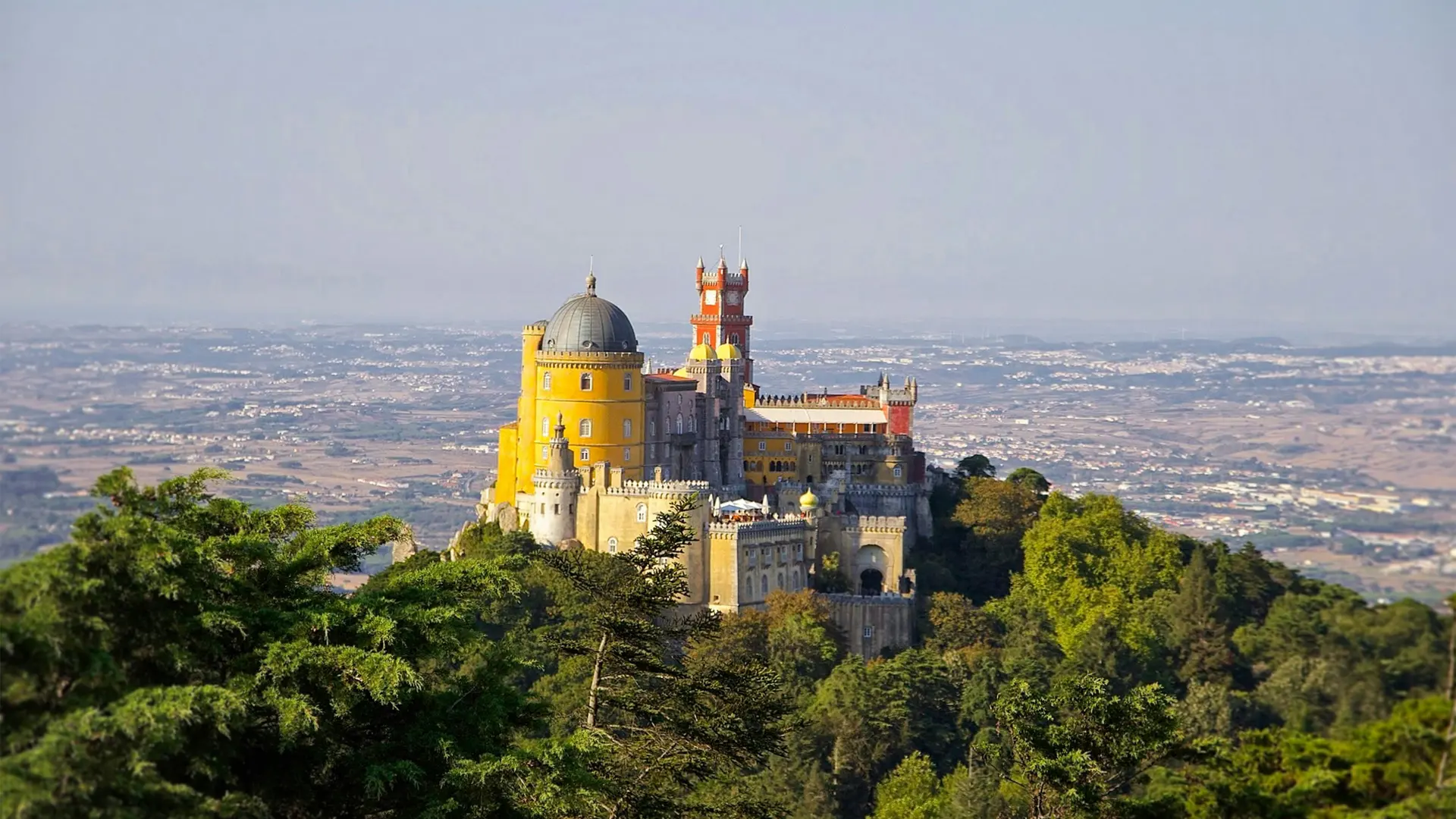
 Ohne Anstehen buchbar
 Was Sie im Inneren des Palácio da Pena erwartet: Ein Rundgang Raum für Raum
Von den silbernen Hirschen im Hirschsaal über die Trompe-l'œil-Gewölbe des Arabischen Saals bis zu den erhaltenen Königsgemächern und dem weitläufigen Park – was Sie in jedem Bereich des Palastes entdecken sollten.
Das Innere des Palácio Nacional da Pena ist unter europäischen Palästen insofern ungewöhnlich, als es nahezu unverändert aus dem Tag erhalten wurde, an dem die portugiesische Königsfamilie im Oktober 1910 ins Exil ging. Königin Amélia von Orléans und ihr Sohn, König Manuel II., nutzten Pena in den letzten Jahren der Monarchie als königliche Residenz, und die Räume wurden weitgehend so belassen, wie sie in jenem Moment waren – einschließlich Mobiliar, Gemälden, persönlichen Gegenständen, gedeckten Tischen und Badezimmerausstattungen. Besucher mit Zeitfenster-Tickets durchlaufen die Gemächer des Königs, die Terrasse der Königin, die großen Prunkräume und die Wirtschaftsbereiche in einem Einbahnrundgang, der in entspanntem Tempo etwa vierzig Minuten dauert. Dieser Leitfaden führt durch die wichtigsten Räume in der Reihenfolge, in der die meisten Besucher sie erleben, und endet mit der Frage, wie viel Zeit man für den Park darüber hinaus einplanen sollte.
Die königlichen Gemächer und privaten Räume
Der Rundgang durch das Innere von Pena beginnt im älteren klösterlichen Kern des Gebäudes, wo der ursprüngliche Hieronymiten-Kreuzgang aus dem sechzehnten Jahrhundert von Ferdinand II. Architekten bewahrt und nicht abgerissen wurde. Die beiden Stockwerke des Kreuzgangs bewahren ihre ursprünglichen manuelinischen Bögen und Azulejo-Tafeln, und die daran angrenzenden Räume beherbergten die intimeren Gemächer der königlichen Familie. Das Schlafzimmer, Ankleidezimmer und Badezimmer des Königs sind mit ihrem Mobiliar aus dem späten neunzehnten Jahrhundert ausgestattet, darunter das Bettgestell von König Manuel II., Kleiderschränke, Frisiertisch und die erstaunlich modernen Sanitäranlagen, die in den 1880er Jahren unter seinem Großvater König Luís I. installiert wurden — ein Zeichen dafür, dass Pena für seine Zeit technologisch fortschrittlich war.
Angrenzend an das Schlafzimmer befindet sich das Arbeitszimmer des Königs, wo persönliche Fotografien, Bücher und kleine Bronzen auf dem Schreibtisch verbleiben. Restauratoren haben diese Objekte in ungefähr den Positionen belassen, die sie zum Zeitpunkt der Abreise der Familie einnahmen, sodass der Raum eher wie ein unterbrochener Tag als eine kuratierte Museumsausstellung wirkt. Das benachbarte private Esszimmer ist für eine kleine Familienmahlzeit gedeckt, mit originalem Porzellan, Glaswaren und Silberbesteck auf dem Tisch. Dies ist der Teil des Palastes, wo der Abstand zwischen Palast-als-Spektakel und Palast-als-Zuhause am geringsten ist — Besucher, die sich hier Zeit nehmen, gewinnen einen stärkeren Eindruck von den Menschen, die tatsächlich in dem Gebäude lebten.
Der Hirschsaal: Das meistfotografierte Interieur des Palastes
Der Hirschsaal gilt weithin als visueller Höhepunkt des Palastinneren. Er nimmt einen kreisförmigen Turmraum auf der älteren klösterlichen Seite des Gebäudes ein und verdankt seinen Namen der eindrucksvollen Decke, die aus Holz geschnitzt und mit Silberblatt veredelt wurde, um einen stilisierten Hirsch darzustellen — eine Jagdallegorie, die sowohl auf Ferdinands II. deutsches Erbe als auch auf die portugiesischen königlichen Jagdtraditionen in der Serra de Sintra verweist. Die Wände sind mit gemalten Jagdszenen, Geweihen und Waffen ausgekleidet, und der Boden ist mit gemustertem Hartholz ausgelegt. Der Raum wurde während der Regierungszeit Ferdinands II. für jagdthematische Empfänge und Abendessen genutzt und behielt diese Funktion unter König Carlos I. und Königin Amélia bei.
Fotografen sollten beachten, dass der Hirschsaal einer der wenigen Innenräume ist, in denen Parques de Sintra Handfotografie ohne Blitz erlaubt. Stative und Blitz sind im gesamten Palast nicht gestattet. Der Raum ist klein und neigt am Vormittag zum Engpass, wenn die Zeitfenster-Gruppen am zentralen Aussichtspunkt unter dem silbernen Hirsch zusammenkommen. Ein Besuch im ersten Zeitfenster des Tages oder in den letzten beiden Zeitfenstern des Nachmittags erhöht die Chance auf ein ungestörtes Foto erheblich. Das Konservierungsteam behandelt das Blattsilber regelmäßig, um Anlaufen und Besucherfeuchtigkeit zu beherrschen; gelegentliche teilweise Schließungen des Decken-Besichtigungsbereichs für diese Arbeiten werden im Voraus angekündigt.
Der Arabische Saal, Indische Saal und dekoratives Programm
Pena eklektizistische Romantik konzentriert sich am stärksten im sogenannten Arabischen Saal, wo Decke und obere Wände mit Trompe-l'œil-Malerei bedeckt sind, die maurische Gewölbe, Muqarnas und islamische geometrische Muster imitiert. Die Malerei wurde in den 1850er Jahren unter der Leitung Ferdinands II. ausgeführt und spiegelt die Faszination des neunzehnten Jahrhunderts für andalusische und nordafrikanische architektonische Formensprachen wider — eine Mode, die mit ähnlichen Räumen in den Palästen von Aranjuez und Schwetzingen geteilt wurde. Wichtig ist, dass der Raum dekorativ und nicht wissenschaftlich ist: Er repräsentiert, wie ein in Deutschland geborener König von Portugal islamische Innenarchitektur imaginierte, nicht eine akademische Rekonstruktion derselben.
Angrenzend befindet sich der Indische Saal, dekoriert mit geschnitzten Teakholzmöbeln, indo-portugiesischen Schränken und Textilien, die Portugals jahrhundertelange maritime und kommerzielle Beziehung zum indischen Subkontinent widerspiegeln. Viele der Objekte gelangten während der Regierungszeit von König Carlos I. in den 1890er Jahren in die königliche Sammlung. Jenseits dieser thematischen Räume ist die Sala Nobre der wichtigste staatliche Empfangsraum, mit kassettierter Decke, großen Ölgemälden und der Art formeller Möbel, die für diplomatische Empfänge verwendet wurden. Die Kapelle, die aus dem ursprünglichen Hieronymitenkloster erhalten blieb, enthält ein bemerkenswertes Renaissance-Altarbild aus Alabaster, das der Werkstatt von Nicolau Chanterene zugeschrieben wird, dem bedeutendsten Renaissance-Bildhauer, der im sechzehnten Jahrhundert in Portugal tätig war — eines der wenigen vorromanischen Überbleibsel innerhalb von Pena.
Die Küche, die Wirtschaftsräume und der königliche Abschied
Die Küche von Pena zählt zu den meistgelobten Räumen unter wiederkehrenden Besuchern – nicht zuletzt, weil sie so unerwartet kommt. Nach den prachtvoll gestalteten Repräsentationsräumen führt der Rundgang hinab in den Wirtschaftsflügel, wo die Arbeitsküche mit ihren Kupfertöpfen, Öfen, Herden, der Eismaschine und den Anrichteplatten erhalten geblieben ist. Das Kupfergeschirr trägt das königliche Monogramm und wurde vom Küchenpersonal bis zum Augenblick der Abreise der Familie im Jahr 1910 verwendet. Die angrenzende Vorratskammer, die Spülküche und die Silberkammer sind in vergleichbar originalem Zustand. Für Besucher, die sich dafür interessieren, wie ein europäischer Königshaushalt des ausgehenden neunzehnten Jahrhunderts tatsächlich funktionierte, ist dies der aufschlussreichste Teil des Palastes.
Der Rundgang endet in den Räumen, die in der letzten Woche der Monarchie genutzt wurden. König Manuel II. verließ Pena bekanntermaßen am Morgen des fünften Oktober 1910 mit wenig Zeit zur Vorbereitung; Dokumente, persönliche Gegenstände und sogar halb gepackte Koffer blieben in den Räumen zurück, als das Personal das Gebäude versiegelte. Nach der Ausrufung der Republik wurde der Palast verstaatlicht und innerhalb weniger Monate in ein Museum umgewandelt. Die heutige Präsentation, die von Parques de Sintra seit Übernahme der Verwaltung im Jahr 2000 schrittweise verfeinert wurde, lässt diese Spuren des Monarchieendes sichtbar, statt sie wegzuräumen. Die Wirkung ist still bewegend: ein Gebäude, das im Moment des historischen Bruchs festgehalten wurde.
Jenseits der Innenräume: Der Park, das Chalet und das Hohe Kreuz
Der Park rund um Pena steht dem Palast selbst in nichts nach und ist in den meisten allgemeinen Eintrittskarten enthalten. Er erstreckt sich über rund zweihundert Hektar dicht bepflanzten Höhenzugs und wurde ursprünglich von Ferdinand II. als romantischer Garten nach dem Vorbild der großen englischen Landschaftsparks angelegt. Die Bepflanzung war bewusst exotisch gewählt: Sicheltannen aus Japan, Baumfarne aus Australien und Neuseeland, Mammutbäume aus Kalifornien, Magnolien, Kamelien und Rhododendren. Viele der ursprünglichen Exemplare, heute mehr als anderthalb Jahrhunderte alt, stehen noch immer. Das Tal der Seen, eine Kette von Zierteichen im unteren Park, gehört nach dem Palast selbst zu den meistfotografierten Orten.
Zwei Ziele im Park lohnen zusätzliche Zeit. Das Chalet of the Countess of Edla, ein kleiner Rückzugsort im Schweizer Stil, den Ferdinand II. für seine zweite Gemahlin, die Opernsängerin Elise Hensler (1869 zur Gräfin von Edla erhoben), errichten ließ, ist zu Fuß vom unteren Park aus erreichbar und zeigt zeitgenössisch möblierte Innenräume. Das Hohe Kreuz (Cruz Alta) ist mit etwa fünfhundertachtundzwanzig Metern über dem Meeresspiegel der höchste natürliche Punkt der Serra de Sintra und bietet einen weiten Blick zurück auf den Palast mit dem dahinter sichtbaren Atlantik. Cabo da Roca, der westlichste Punkt des europäischen Festlands, ist an klaren Nachmittagen erkennbar. Für Besucher, die das Parkgelände ohne Besichtigung der Palastinnenräume erleben möchten, gibt es eine reine Park-Eintrittskarte – eine sinnvolle Option für wiederkehrende Gäste, die die Räume bereits kennen.
Häufig gestellte Fragen
Wie lange dauert eine typische Innenbesichtigung?
Der reguläre Rundgang durch die Palastinnenräume dauert in stetigem Tempo zwischen dreißig und fünfundvierzig Minuten. Besucher, die sich im Hirschsaal, der Küche und den Gemächern des Königs mehr Zeit nehmen, verbringen oft nahe einer Stunde.
Darf ich im Palast fotografieren?
Ja, Fotografie aus der Hand ohne Blitz ist in allen Innenräumen gestattet. Stative, Einbeinstative und Blitzlicht sind nicht erlaubt. In einigen konservatorisch sensiblen Bereichen können zusätzliche Hinweise am Tag Ihres Besuchs ein Fotografieverbot ausweisen.
Werden Führungen im Inneren des Palastes angeboten?
Parques de Sintra bietet planmäßige Führungen auf Portugiesisch und Englisch an, und private, von Turismo de Portugal lizenzierte Guides können Besucher mit regulären Zeitfenster-Tickets begleiten. Der Innenrundgang ist eine Einbahnstraße, daher müssen Guides mit dem Besucherstrom Schritt halten.
Welcher Saal ist der eindrucksvollste?
Die Meinungen gehen auseinander, doch der Hirschsaal mit seiner silberblattverzierten Schnitzdecke und der Große Saal (Sala Nobre) mit Kassettendecke und repräsentativer Ausstattung werden am häufigsten genannt. Die Küche gilt als beeindruckendster überraschender Raum.
Ist die Kapelle immer zugänglich?
Ja, die Kapelle gehört zum regulären Rundgang durch die Innenräume. Das Renaissance-Altarbild aus Alabaster, das der Werkstatt von Chanterene zugeschrieben wird, ist das bedeutendste Kunstwerk und entstand etwa drei Jahrhunderte vor dem übrigen Palast.
Was ist der Unterschied zwischen der Eintrittskarte Palast+Park und der reinen Park-Eintrittskarte?
Das Ticket Palace+Park umfasst den Zeitfenster-Einlass in die Innenräume sowie vollen Zugang zum umliegenden Park. Das Park-only-Ticket schließt das Innere aus und ist für Besucher gedacht, die nur die Gärten, das Tal der Seen, den Aussichtspunkt Cruz Alta und das Chalet der Gräfin von Edla sehen möchten.
Benötigt man für das Chalet der Gräfin von Edla eine separate Eintrittskarte?
Das Chalet kann je nach aktuellem Ticketsystem von Parques de Sintra separat oder in Kombination mit dem Palasteintritt gebucht werden. Der kombinierte Zugang erlaubt in der Regel einen vollen Tag auf dem Bergrücken vom Palast über das Chalet bis zum Hochkreuz.
Sind die Räume klimatisiert?
Die Haupträume werden im Rahmen des Konservierungsprogramms hinsichtlich Temperatur und Luftfeuchtigkeit überwacht. Besucher werden bemerken, dass einige Räume spürbar kühler sind als die Flure – dies ist beabsichtigt.
Kann ich die persönlichen Gegenstände des Königs besichtigen?
Ja. Persönliche Gegenstände befinden sich noch auf dem Schreibtisch des Königs, in den Schränken des Ankleidezimmers und rund um das Schlafzimmer – in annähernd ihrer ursprünglichen Anordnung nach der Abreise von 1910.
Ist der Innenrundgang für Besucher mit eingeschränkter Mobilität zugänglich?
Der Innenrundgang umfasst mehrere Treppen zwischen den Räumen und ist für Rollstuhlfahrer schwierig. Parques de Sintra bietet Orientierung für eingeschränkte Mobilität; kontaktieren Sie sie im Voraus für die aktuellen Regelungen.