Elke vraag die ons over Pena wordt gesteld, in alfabetische volgorde. Open er één om het antwoord ter plekke te lezen.
Geldt het tijdslot voor het hele bezoek of alleen voor het interieur van het paleis?
Alleen voor het interieur van het paleis. Het park is de hele dag toegankelijk voor iedereen met een ticket dat het park omvat. Uw tijdslot bepaalt alleen wanneer u door de paleisdeur mag gaan — doorgaans een venster van 30 minuten. Eenmaal binnen mag u zo lang doen als redelijkerwijs nodig is op de eenrichtingsroute.
Hoe druk is het bij Pena?
Zeer druk. Pena ontvangt meerdere miljoenen bezoekers per jaar en op zomerse zaterdagen kan het bovenste park tussen 11:30 en 15:00 uur vol aanvoelen. De betrouwbare oplossingen zijn een interieurticket voor het eerste tijdvak (09:30–10:00 in de meeste seizoenen), bezoeken doordeweeks, bezoeken buiten het seizoen tussen november en februari (wanneer de mist het meest betrouwbaar aanwezig is en het park het meest leeg), en het vermijden van dagen waarop meerdere cruiseschepen in Lissabon aangemeerd liggen. Onze pagina /guides/best-time-to-visit/ behandelt de patronen van cruisedagen gedetailleerd.
Hoe kom ik bij het Pena Paleis?
Het Pena Paleis ligt boven het stadje Sintra, ongeveer 30 kilometer ten noordwesten van Lissabon. De eenvoudigste manier is per trein: er rijden frequente diensten van station Rossio in Lissabon naar Sintra in circa 40 minuten, en vanaf station Sintra brengt de ringbus 434 u de heuvel op naar het paleis, met onderweg ook een halte bij het Moorse Kasteel. De busrit duurt ongeveer 15 minuten, al kunnen de wachtrijen in het hoogseizoen lang zijn. Energieke bezoekers kunnen er ook voor kiezen omhoog te wandelen door het Park van Pena, een steile klim van zo'n 30 tot 40 minuten vanuit het historische centrum. Met de auto is Pena ongeveer 40 minuten rijden vanuit Lissabon, maar parkeren bij de ingang is zeer beperkt en de smalle heuvelwegen raken 's zomers verstopt. Vanaf de hoofdingang is het nog een stuk bergop lopen, of een korte shuttle, om het paleis zelf te bereiken.
Hoe laat gaat Pena Palace open en dicht?
Parques de Sintra past de openingstijden seizoensgebonden aan en wij vermelden ze nooit in lange teksten om te voorkomen dat ze verouderen. Grofweg opent het park tussen 09:00 en 09:30 en sluit het tussen 18:30 en 19:30, afhankelijk van het seizoen, met het paleisinterieur dat binnen dat venster op een iets smaller tijdsbestek geopend is. Controleer altijd de actuele tijden op het gepubliceerde schema van de exploitant voor uw specifieke datum — ze verschuiven rond winter- en zomertijd en feestdagen.
Hoe lang duurt een gemiddeld bezoek?
Houd in totaal 3–4 uur aan: 45–60 minuten in het paleis, 90+ minuten in het park, plus reistijd van en naar de ingang.
Hoe verhoudt Pena Palace zich tot het Moorse Kasteel op de naburige bergkam?
De twee liggen op naburige heuvelruggen, ongeveer 20 minuten lopen van elkaar, en vullen elkaar aan in plaats van te concurreren. Het Castelo dos Mouros, of Moorse Kasteel, is een gedeeltelijk gerestaureerd 8e- tot 9e-eeuws heuvelfort, de oudere locatie met ongeveer duizend jaar, en draait volledig om beloopbare wallen en weidse panorama's over Sintra en de Atlantische Oceaan; er zijn geen binnenkamers te bezoeken. Het Pena Paleis daarentegen is een 19e-eeuws romantisch paleis waarvan de aantrekkingskracht ligt in verzadigde kleuren, eclectische revivalarchitectuur en rijkelijk ingerichte koninklijke interieurs die bewaard zijn gebleven sinds de dag dat de monarchie viel in 1910. Het kasteel beloont een wandeling en een uitzicht; het Pena Paleis beloont een langzame blik op kamers en ontwerp. Ze delen een gemeenschappelijk entreeterrein en dezelfde beheerder, en de meeste bezoekers die beide op één dag doen, beklimmen eerst het Moorse Kasteel, als de benen nog fris zijn, en eindigen bij het Pena Paleis, waarbij ze het grotere spektakel voor het laatst bewaren.
Hoeveel tijd moet ik reserveren voor een bezoek aan Pena Palace?
Plan minstens drie uur voor een bezoek aan Pena Palace met Palace en Park, en vier tot vijf uur als u alles rustig wilt zien. Een realistische verdeling is 60 tot 75 minuten in het paleis zelf, inclusief de korte wachttijd bij de deur met het tijdslot en de eenrichtingsroute door de koninklijke vertrekken; ongeveer 90 minuten dwalen door het park van 200 hectare; en een buffer voor de steile klim van 600 meter, of de shuttle, van de lagere poort naar het voorplein van het paleis. Het toevoegen van het Chalet of the Countess of Edla in het westelijke park en de klim van 20 minuten naar het uitzichtpunt High Cross brengt het bezoek richting vier of vijf uur. Gezinnen met jonge kinderen kunnen beter een volle vijf uur rekenen en de interne shuttlebus nemen om kleine benen te sparen. Omdat het park op zichzelf echt een halve dag is, is het opjagen van Pena Palace de grootste spijt die de meeste bezoekers melden.
Is de conciërgeservice de moeite waard in plaats van direct bij de beheerder te kopen?
Het hangt ervan af wat u belangrijk vindt. Een service zoals de onze voegt zorgvuldig gekozen tijdsloten toe (het juiste venster voor het interieur op basis van uw voorkeur voor licht en drukte), voorbereiding vóór de reis, een contactpunt in uw eigen taal voor wijzigingen, en bundeling met transfers of andere bezienswaardigheden in Sintra. Als u de magische versie van het bezoek wilt, met iemand die de operationele details beheert, dan bestaan wij daarvoor.
Is er een dresscode bij Pena Palace?
Er geldt geen formele kledingvoorschrift. Praktische kleding is belangrijker dan formele kleding: gesloten schoenen met profiel voor de granieten paden, een extra laag vanwege de temperatuurverschillen ten opzichte van Lissabon, en een lichte regenjas voor de nevel tussen oktober en mei. De paleiskapel — nog steeds gewijd — verzoekt uit hoffelijkheid de schouders bedekt te houden.
Is het geschikt voor kinderen?
Ja — kinderen zijn over het algemeen dol op de sprookjesachtige buitenkant, de kerkers en de kanonnen. Kinderwagens zijn lastig op de keien; een shuttle vanaf de toegangspoort helpt.
Is het paleis rolstoeltoegankelijk?
Gedeeltelijk. Het park en de kamers op de begane grond zijn toegankelijk via shuttle en hellingen. De koninklijke vertrekken op de bovenverdieping zijn alleen via trappen bereikbaar en hebben geen lift.
Is Pena Palace de moeite waard als ik maar één dag in Sintra heb?
Ja. Het Pena Paleis is de meest opvallende attractie in het Culturele Landschap van Sintra en de plek die de meeste dagjesmensen niet willen missen. Hoog op de beboste top van de Serra de Sintra, met zijn kanariegele klokkentoren, vermiljoenen Manuelijnse vleugel en Moorse kantelen, is het een van de meest gefotografeerde gebouwen van Europa. Binnenin zijn de koninklijke appartementen vrijwel exact bewaard zoals het Portugese koningshuis ze achterliet toen de monarchie viel in oktober 1910. Als u maar één dag en één locatie heeft, kies dan voor het Pena Paleis en reken op minimaal vier uur, inclusief trein en bus vanuit Sintra-stad. Heeft u tijd voor een tweede stop, combineer het dan met Quinta da Regaleira voor de esoterische tuinen en de Initiatieput, of met het nabijgelegen 8e-eeuwse Moorse Kasteel voor de wallen en het Atlantische uitzicht. Wie echter alle drie op één dag probeert te doen, voelt zich meestal opgejaagd.
Is Pena Palace ooit daadwerkelijk bewoond geweest?
Ja. Het Pena Paleis was een werkend koninklijk verblijf, dat regelmatig werd gebruikt door de Portugese koninklijke familie vanaf de voltooiing in 1854 tot het einde van de monarchie in 1910. Koning Ferdinand II, die het bouwde, gebruikte het als zomerverblijf, en het ging over op zijn zoon koning Luis, zijn kleinzoon koning Carlos en zijn achterkleinzoon koning Manuel II, de laatste koning van Portugal. Het was een van de eerste Portugese koninklijke residenties die werd uitgerust met een werkende telefoonlijn. Toen Manuel II op 5 oktober 1910 tijdens de republikeinse revolutie aan boord van het koninklijke jacht in ballingschap vluchtte, werden zijn privé-appartementen in het Pena Paleis kort daarna verzegeld en bewaard met hun oorspronkelijke meubels, boeken en persoonlijke voorwerpen, grotendeels zoals hij ze had achtergelaten. Als u er vandaag doorheen loopt, ziet u geen museumreconstructie, maar de kamers die een Edwardiaanse koninklijke familie werkelijk gebruikte, bevroren op het moment dat de monarchie viel, met koperen kookgerei dat nog steeds in de keuken hangt.
Is Pena Palace toegankelijk voor rolstoelen?
Gedeeltelijk. Parques de Sintra exploiteert een interne pendelbus van de lagere parkpoort naar het paleisvoorplein die rolstoeltoegankelijk is. De buitenterrassen rond het paleis zijn grotendeels toegankelijk. De interieurroute door de zalen omvat verschillende trappen en smalle gangen en is niet volledig rolstoeltoegankelijk. Het Chalet van de Gravin van Edla en het Hoogkruis omvatten onverharde paden en hellingen. Parques de Sintra publiceert een specifieke toegankelijkheidspagina op haar website, die wij elke bezoeker met verminderde mobiliteit aanraden te raadplegen vóór het boeken.
Is Pena Palace UNESCO-werelderfgoed?
Ja. Pena vormt het middelpunt van het Cultureel Landschap van Sintra, dat in 1995 op de UNESCO Werelderfgoedlijst is geplaatst. De aanwijzing omvat het bredere landschap van de heuvels van Sintra en verscheidene monumenten daarbinnen — Pena, het Moorse Kasteel, het Nationaal Paleis van Sintra in het stadje, de tuinen van Monserrate en het Capuchos Klooster — als een samenhangend cultureel landschap uit de Romantiek.
Kan ik het interieur van de kapel in Pena bezichtigen?
Ja, met het ticket Paleis + Park. De kapel is het oudste deel van het complex — de oorspronkelijke 16e-eeuwse structuur gewijd aan Nossa Senhora da Pena die de aardbeving van 1755 overleefde — en wordt vroeg in de eenrichtingsroute door het interieur bereikt. Het behoudt zijn originele altaarstuk van albast en is nog steeds gewijd; de beheerder verzoekt bezoekers hun stem te dempen en de schouders bedekt te houden.
Kan ik met de auto naar Pena Palace rijden?
Nee, niet tot aan het paleis zelf. De bovenste Serra-weg is sinds 2022 gesloten voor privévoertuigen. Zelfstandige bezoekers parkeren op een van de lagere bergparkeerplaatsen en gebruiken de pendelbus van Parques de Sintra, de 434 hop-on bus, of een vooraf geregeld transfer om de paleispoort te bereiken. Privétransfers kunnen bij de hoofdingang afzetten en ophalen, ook al kan het algemene verkeer dat niet.
Kan ik mijn datum of tijdstip wijzigen?
Na boeking zijn tijdslots niet overdraagbaar en niet restitueerbaar. Indien u wilt wijzigen, neem dan contact met ons op via bookings@palaciopena.com — wij helpen waar mogelijk, maar kunnen geen nieuw tijdslot garanderen, zeker niet in het hoogseizoen.
Kan ik Pena Palace bezoeken zonder de vertrekken binnen te gaan?
Ja. Het Park-only ticket geeft u toegang tot de tuinen en de buitenterrassen rondom het paleis — inclusief alle belangrijke fotolocaties — maar niet tot het interieur. Dit is de juiste keuze als fotografie en landschap uw prioriteit hebben boven de vertrekken en koninklijke geschiedenis. Wij adviseren bezoekers die voor het eerst komen standaard het Palace + Park ticket, omdat het interieur ongewoon is; zie het ticketgedeelte hierboven.
Mag ik een buggy of kinderwagen meenemen in Pena Palace?
Het park in, ja, hoewel de paden op sommige plekken steil zijn. Het paleisinterieur in, in de praktijk nee — de eenrichtingsroute omvat verschillende trappen en nauwe doorgangen. Parques de Sintra biedt een buggy-parkeerplaats nabij de paleisdeur. Een zachte babydrager is de juiste keuze voor het interieur met baby's.
Mag ik fotograferen in Pena Palace?
Ja, in de meeste kamers, zonder flits. Een klein aantal kamers — doorgaans die met kwetsbare textiel of recent geconserveerd decoratief schilderwerk — verbiedt fotografie volledig; deze zijn bij de deur gemarkeerd met bewegwijzering. Statieven zijn binnen niet toegestaan. Drones zijn verboden in het gehele Sintra Cultural Landscape, inclusief het park.
Waar bevindt zich precies het Hoge Kruis (Cruz Alta) en is de wandeling de moeite waard?
Het Hoge Kruis is de granieten rotspartij op het hoogste punt van de Serra de Sintra, 528 meter boven zeeniveau, ongeveer 20 minuten bergopwaarts lopen ten zuidoosten van het paleis door het bovenste parkgedeelte. Het pad is van oneffen graniet en niet toegankelijk voor kinderwagens of rolstoelen. De wandeling is beslist de moeite waard vanwege het panoramische uitzicht — de Atlantische Oceaan, Cabo da Roca, de Taag en het paleis zelf in zijn volledige landschappelijke context — en biedt de beste fotopositie op het landgoed.
Wanneer is Pena Palace gebouwd en door wie?
Het Pena Paleis werd gebouwd tussen 1842 en 1854 voor koning Ferdinand II van Saksen-Coburg en Gotha, de in Duitsland geboren echtgenoot van koningin Maria II van Portugal en een neef van zowel de Britse koningin Victoria als prins Albert. Ferdinand kocht de heuveltop in 1838 en gaf de Duitse mijningenieur en amateur-architect baron Wilhelm Ludwig von Eschwege de opdracht er een romantisch zomerverblijf voor de koninklijke familie van te maken. Het paleis verrees op de ruïnes van een 16e-eeuws Hiëronymietenklooster dat koning Manuel I had gesticht en dat de grote aardbeving van Lissabon in 1755 tot puin had herleid; de kapel en de Manuelijnse kloostergang overleefden en werden bewust in het nieuwe gebouw geïntegreerd. Ferdinand hield zelf toezicht op het levendige kleurenschema, de eclectische mix van revivalstijlen en het omliggende park. Na zijn dood in 1885 verwierf de Portugese staat het Pena Paleis in 1889, en na de republikeinse revolutie van 1910 werd het een nationaal monument.
Wanneer moet ik arriveren?
10–15 minuten voor uw geboekte tijdslot. Eerder aankomen mag, maar u wordt pas op uw gereserveerde tijd binnengelaten — en het tijdslot is strikt, dus te laat komen kan betekenen dat u moet wachten op het eerstvolgende beschikbare moment.
Wat als het regent?
Pena is bij elk weer geopend en de meeste bezoekers ervaren mistige of regenachtige dagen juist als sfeerversterkt. Restitutie wegens weersomstandigheden is niet mogelijk. Bij een zeldzame sluiting door de beheerder restitueren wij het volledige bedrag.
Wat gebeurt er als ik mijn tijdslot voor het interieur van Pena Palace mis?
Medewerkers van Parques de Sintra zullen late aankomsten normaal gesproken proberen toe te laten in het volgende beschikbare venster als er capaciteit is, maar in het hoogseizoen — grofweg april tot oktober en op elke cruisedag in Lissabon — is die er vaak niet. Kom vijf tot tien minuten voordat uw venster opent bij de paleisdeur aan om veilig te zijn. Als u via een conciërge heeft geboekt, neem dan zo snel mogelijk contact met hen op zodra u weet dat u te laat zult zijn, zodat zij kunnen coördineren.
Wat is het Pena Paleis?
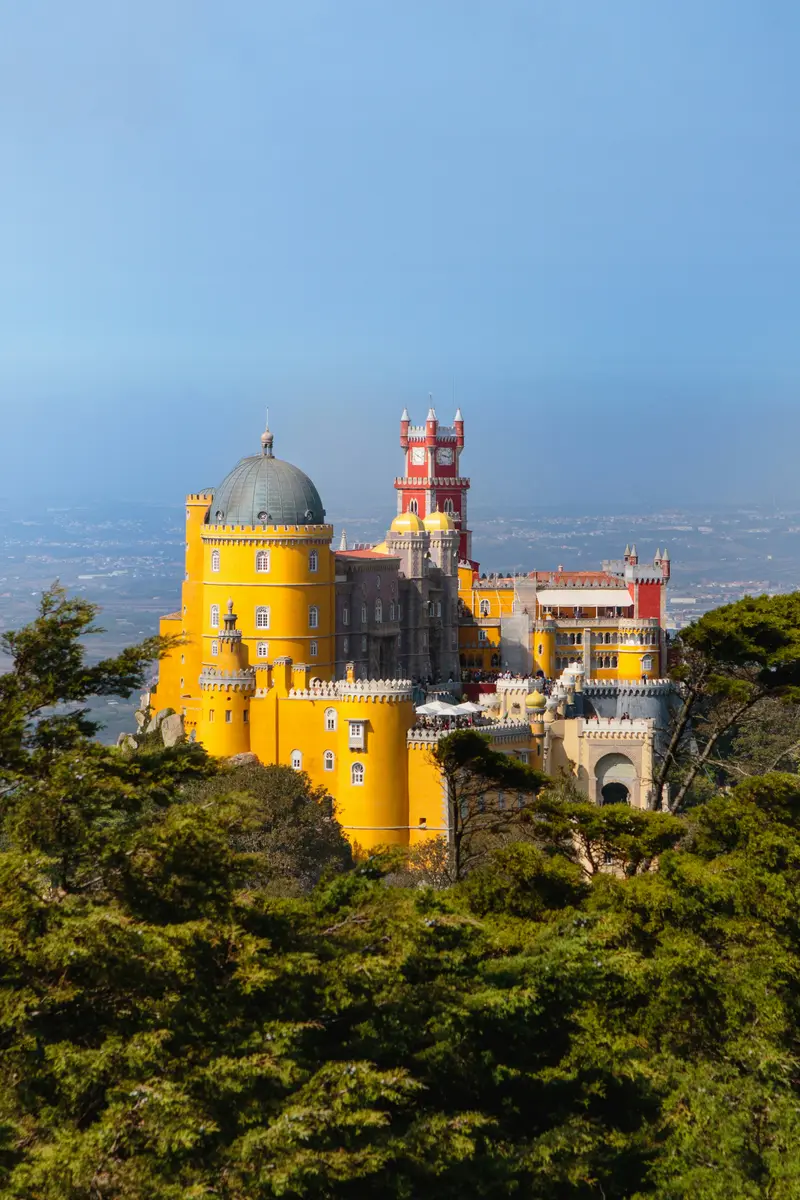
Het Pena Paleis (Palácio Nacional da Pena) is een 19e-eeuws romantisch paleis dat op een beboste heuveltop boven het stadje Sintra in Portugal uittorent. Het werd vanaf de jaren 1840 gebouwd voor koning Ferdinand II op de ruïnes van een hiëronymietenklooster dat verwoest was door de aardbeving van Lissabon in 1755, en was grotendeels voltooid in 1854. Het paleis staat bekend om zijn levendige kleuren en uitgesproken eclectische ontwerp, dat neogotische, neomanuelijnse, neomoorse en neorenaissance-elementen samenvoegt tot een sprookjesachtig silhouet. Hoogtepunten zijn de roodgele terrassen met weidse uitzichten over de Serra de Sintra, de allegorische Tritonpoort, de bewaarde kloostergang en vertrekken van het voormalige klooster, en de rijk ingerichte koninklijke interieurs. Het paleis ligt in het uitgestrekte, beboste Park van Pena en maakt deel uit van het Cultureel Landschap van Sintra, dat op de UNESCO-Werelderfgoedlijst staat, en wordt gerekend tot de Zeven Wonderen van Portugal.
Wat is inbegrepen bij het ticket met voorrangstoegang?
Toegang tot zowel het interieur van Pena Palace als het omliggende park van 200 hectare, met prioriteitsdoorgang bij de ingang van het paleis. Je tijdslot van 30 minuten is gereserveerd voordat je aankomt.
Wat is uw restitutiebeleid?
Tickets zijn geldig voor een specifieke datum en kunnen na uitgifte niet worden overgedragen. Wanneer uw plannen wijzigen, antwoordt u minstens 48 uur voor uw bezoekdatum op uw bevestigingsmail en wij boeken uw bezoek opnieuw in een beschikbaar tijdslot in de agenda van de beheerder.
Welk Pena Palace ticket moet ik kopen — Paleis en Park, of alleen Park?
Voor bijna alle eerstebezoekers is het ticket Paleis + Park de juiste keuze. Het park-only ticket — rechtstreeks verkocht door Parques de Sintra tegen een lagere prijs — dekt het 200 hectare grote terrein, de buitenterrassen, de valleimeren en vrijwel elke buitenfoto van Pena die u ooit heeft gezien. Het is het overwegen waard als u een terugkerende bezoeker bent die zich richt op het landschap in plaats van op de zalen. Voor alle anderen is het interieur de reden dat Pena niet zomaar weer een fotogeniek Portugees kasteel is: de koninklijke vertrekken werden verzegeld op de dag dat de monarchie viel in oktober 1910 en zijn nog precies zo als de koninklijke familie ze achterliet — een werkende residentie, halverwege de middag bevroren midden in een revolutie. Pena Palace Tickets boekt Paleis + Park met voorrangstoegang zonder wachten en ondersteuning in uw eigen taal, inbegrepen in de prijs. Wij verkopen geen park-only optie; als u dat nodig heeft, boek dan rechtstreeks via de website of het ticketkantoor van Parques de Sintra.
Welke bouwstijl heeft Pena Palace?
Het Pena Paleis is het baanbrekende meesterwerk van de Portugese romantische revival-architectuur en een van de vroegste romantische paleizen van Europa, ongeveer drie decennia ouder dan Ludwig II van Beieren's Neuschwanstein. In plaats van één enkele stijl te volgen, combineert het bewust vier stijlen: neogotische kantelen en spitsbogen; neo-Manuelijnse gedraaide-koordornamenten en maritieme motieven die verwijzen naar Portugal's 16e-eeuwse Ontdekkingstijdperk; neo-islamitische hoefijzerbogen, tegelkoepels en beschilderde gewelven die Moorse stucwerk imiteren; en neorenaissance interieurdecoraties. De eclectische combinatie was een bewuste uitspraak van koning Ferdinand II over de Portugese nationale identiteit, geen architectonische besluiteloosheid. De twee dominante kleuren van het gebouw maken deel uit van het ontwerp: de rode Manuelijnse vleugel omhult de overgebleven kloostergang van het oude klooster, terwijl de kanariegele vleugel de nieuwere koninklijke appartementen herbergt. Het resultaat is een enkel sprookjesachtig silhouet van torens, koepels en kantelen dat nergens anders in Portugal te vinden is en tot de meest gefotografeerde gebouwen van Europa behoort.
Wie is de gravin van Edla en waarom heeft zij een chalet?
Elise Hensler was een in Amerika geboren, in Zwitserland opgegroeide operazangeres die Ferdinand II ontmoette na de dood van koningin Maria II. Ze trouwden in 1869 en zij werd benoemd tot gravin van Edla. Ferdinand bouwde voor haar een huisje in Zwitserse chaletstijl in het westelijke deel van het park van Pena als privétoevluchtsoord, bewust verschillend van het hoofdpaleis. Het raakte in 1999 zwaar beschadigd door brand en heropende in 2011 na restauratie. Het heeft zijn eigen tijdslot en is inbegrepen bij gecombineerde Pena-tickets.
Zijn er eet- en drinkmogelijkheden bij Pena?
Ja. Er is een café en een restaurant op paleishoogte bij de ingang, en een tweede kleiner café in het lager gelegen park. Beide kunnen druk zijn tijdens de lunchpiek en zijn geen gastronomische bestemmingen. Veel bezoekers geven de voorkeur aan eten vóór of na hun bezoek aan Pena in de stad Sintra, waar een grotere concentratie restaurants te vinden is. In het park zijn waterfonteinen beschikbaar; een hervulbare fles meenemen is verstandig.
Zijn honden toegestaan bij Pena Palace?
Kleine honden aan de lijn zijn toegestaan in het park; zij zijn niet toegestaan in het paleisinterieur. Bezoekers met assistentiehonden worden overal toegelaten. Waterbakken staan niet standaard langs de route — neem uw eigen bak mee bij een bezoek in de zomer.


 7 min
7 min  6 min
6 min  6 min
6 min  6 min
6 min